His Highness Sheikh Mohammed bin Rashid Al Maktoum, Vice President, Prime Minister, and Ruler of Dubai, witnessed the launch of the “National Family Growth Agenda 2031” as part of the UAE Government Annual Meetings held in Abu Dhabi.
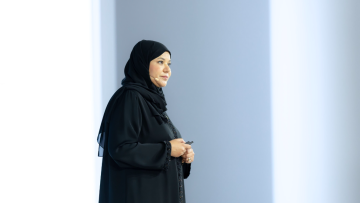
H.H. Sheikh Mohammed bin Rashid Al Maktoum listened to a presentation delivered by Sana bint Mohammed Suhail, Minister of Family, who outlined the objectives of the “National Family Growth Agenda 2031.”
The agenda represents a national commitment that reflects a unified vision between the government and the community in assuming shared responsibility to build prosperous and sustainable families, who are essential for safeguarding national achievements and advancing towards further development and wellbeing.
She affirmed that the launch of the “National Family Growth Agenda 2031” coincides with UAE President His Highness Sheikh Mohamed bin Zayed Al Nahyan’s announcement of 2026 as the “Year of Family”.
He also referred to the UAE’s Founding Father, the late Sheikh Zayed bin Sultan Al Nahyan, who regarded the family as the cornerstone of a resilient society.
In his remarks during the session, H.H. Sheikh Mohammed bin Rashid Al Maktoum said, “Our cohesive society is the source of our strength, the foundation of our success, and the UAE’s greatest asset today and in the future.”
He added, “Cementing Emirati values and enhancing the family’s stability and well-being is a vital national responsibility and the ultimate goal of every government effort.”
The initiative aims to raise awareness among citizens and residents across the UAE of the importance of maintaining strong, cohesive family ties, which are the fundamental building blocks of a resilient and prosperous society.
It also seeks to promote the deeply rooted values of unity, empathy and cooperation that characterise Emirati society and ensure these values are passed on to future generations.
Sheikha Latifa bint Mohammed bin Rashid Al Maktoum, Chairperson of Dubai Culture and Arts Authority (Dubai Culture); Sana bint Mohammed Suhail, Minister of Family; and several Sheikhs, ministers, senior officials and family development affairs specialists were also present at the launch.
Sana bint Mohammed Suhail added that the agenda, developed in consultation with more than 20 federal and local entities, aims to achieve a set of outcomes by 2031, including the increase in the number of Emirati births and boosting marriage rates among Emirati citizens.
She said the agenda is built on three strategic pillars that define the core areas of action toward building a prosperous and sustainable Emirati society.
The first focuses on strengthening family identity by encouraging the community to adopt a “family growth mindset,” reshaping the narrative around family life, and inspiring commitment to family growth as a core national value.
The second centres on consolidating family foundations by providing social, economic, health, and housing support, creating an enabling environment that allows young people to form, nurture and sustain families.
The third pillar focuses on empowering families by strengthening family ties that promote growth and reinforce social cohesion.
Sana bint Mohammed Suhail stated that the “National Family Growth Agenda 2031” seeks to reinforce positive values as the foundation upon which family growth decisions are made to lead the path towards a prosperous future.
It aspires to reaffirm the family’s role as a fundamental source of identity, particularly among young people, and to counter external influences or media messages that may impact family values.
The ministry, she explained, is responsible for formulating national strategies that support family growth and reinforce the family’s role in promoting values, national identity, and responsible upbringing grounded in Emirati traditions and customs.
He affirmed that the Emirati family plays a vital role in safeguarding the UAE’s culture, values, and national identity.
H.H. Sheikh Mohamed bin Zayed emphasised that addressing the challenges of family growth is not the responsibility of the Ministry of Family alone, but a shared national commitment that requires close cooperation across all sectors, including government, the private sector, and the wider community.
In this context, the ‘UAE Year Of’ initiative, launched in 2015, continues to play an important role in uniting everyone who calls the UAE home around shared national priorities.
Attendees included H.H. Sheikh Khaled bin Mohamed bin Zayed Al Nahyan, Crown Prince of Abu Dhabi; H.H. Sheikh Mansoor bin Mohammed bin Rashid Al Maktoum, President of the UAE National Olympic Committee; H.H. Sheikh Ahmed bin Mohammed bin Rashid Al Maktoum, Second Deputy Ruler of Dubai and Chairman of the Dubai Media Council; H.H. Lieutenant General Sheikh Saif bin Zayed Al Nahyan, Deputy Prime Minister and Minister of the Interior; and Sheikh Mohammed bin Hamad bin Tahnoun Al Nahyan, Advisor to the UAE President.
Also present were H.H. Sheikha Maryam bint Mohamed bin Zayed Al Nahyan, Deputy Chairperson of the Education and Human and Community Development Council; H.H. Sheikh Sultan bin Mohammed bin Sultan Al Qasimi, Crown Prince and Deputy Ruler of Sharjah; H.H. Sheikh Ammar bin Humaid Al Nuaimi, Crown Prince of Ajman; and H.H. Sheikh Mohammed bin Rashid bin Mohammed bin Rashid Al Maktoum.
H.H. Sheikh Mohammed bin Rashid Al Maktoum praised the efforts of the Ministry of Family, and federal and local entities that contributed to developing the agenda.
H.H. Sheikh Mohamed bin Zayed noted that the establishment of the Ministry of Family stemmed from a recognition of the family’s vital role in society.
He called for a unified national narrative that underscores the central role of the family and enhances public awareness of its importance.
Concluding his remarks, H.H. Sheikh Mohamed bin Zayed directed that 2026 be designated the Year of the Family.
He expressed confidence in the ability of national teams to achieve the agenda’s objectives, noting that the family portfolio is at the center of the UAE’s strategic priorities.
President His Highness Sheikh Mohamed bin Zayed Al Nahyan today attended a session focused on the National Family Growth Agenda 2031, held as part of the 2025 Annual Government Meetings in Abu Dhabi.
He noted that strong, stable families are essential to the UAE’s long-term prosperity, describing family growth as a national priority.
H.H. Sheikh Mohamed bin Zayed also highlighted the importance of all sectors – including healthcare, education, housing, the economy, and the media – in supporting national initiatives and plans.
Sana bint Mohammed Suhail noted initiatives and programs will be launched in the agenda’s first phase of implementation.
She expressed confidence that, through collaboration, shared responsibility and a unified sense of purpose, the nation can achieve its goals in a way that benefits society and reinforces national identity.
The session brought together senior officials and leaders from federal and local entities.
Additional remarks:
“Family growth has always been, and will remain, a core national priority and an investment that safeguards our achievements and secures a better future for generations to come.”
Sana bint Mohammed Suhail also noted that the agenda focuses on three main pathways: policies and programmes, behavioural interventions, and reproductive health.
The first pathway involves reviewing current policies and programmes that directly or indirectly impact family growth.
The second focuses on understanding the social and behavioural drivers of family growth through on-the-ground interviews with Emirati families across the country.
The third pathway reviews current reproductive health initiatives, identifies existing challenges, and explores ways to address them.
These initiatives fall under key themes, including family-work balance, promoting positive mindsets and behaviors, reproductive health programs, and other forms of support and benefits.
It also seeks to strengthen parents’ sense of pride and purpose in raising the next generation.